 Hanson Robotics (hansonrobotics.com)
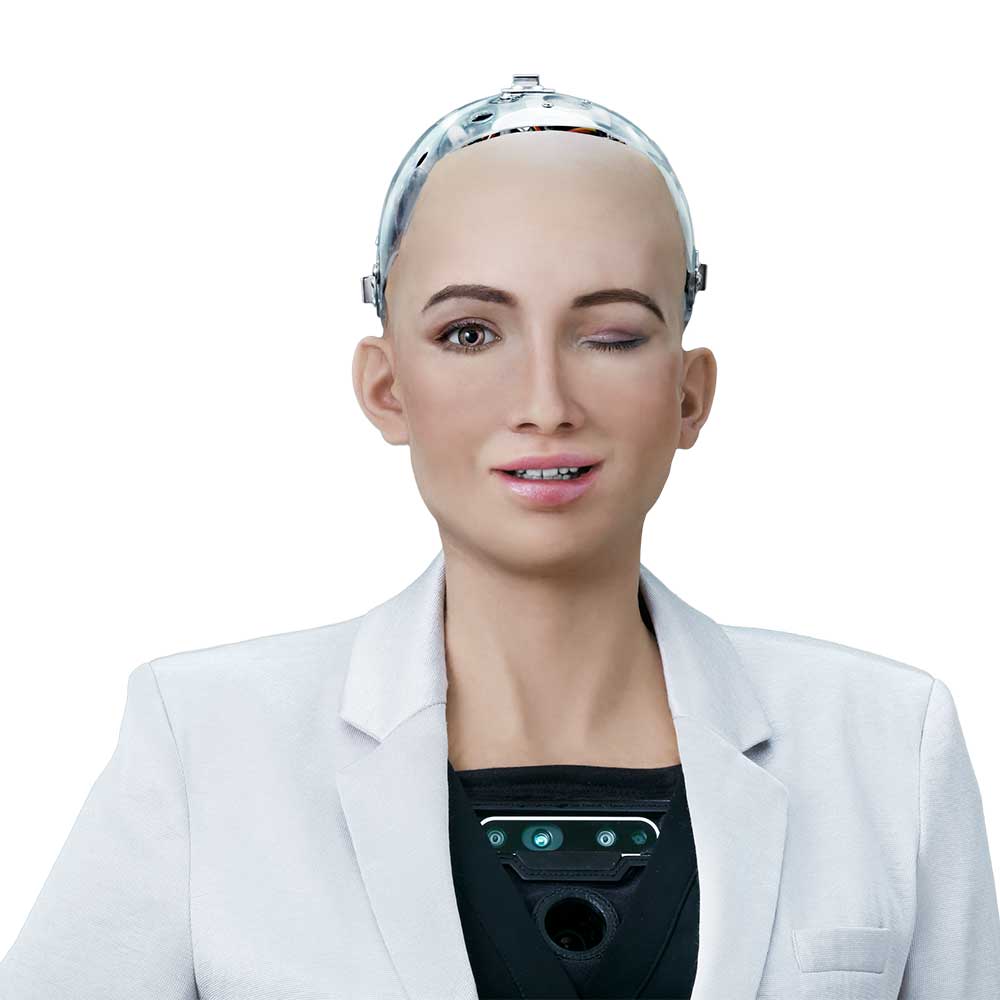
 Hanson Robotics Sophia
by Hanson Robotics · February 2016
Hanson Robotics Sophia is the most famous social humanoid robot in the world, known for her realistic facial expressions and conversational AI. Sophia uses a combination of natural language processing and facial recognition to engage in conversations and express a range of human-like emotions.
Capabilities
Specifications
Physical
Performance
Sensing & Perception
Computing & AI
Connectivity
Safety & Environment
Control
Pricing and Availability
This robot is only available to enterprise customers and commercial partners. Contact the manufacturer directly for pricing, availability, and licensing terms.
Enterprise pricing is determined on a per-contract basis. Factors typically include volume, deployment scope, support level, and integration requirements.
Known Personas
See all →AI, Data & Privacy
Mixed - some data on-device, some in cloud
This robot uses a hybrid approach where some data is processed locally on the device and some is sent to cloud servers. The level of EU data protection depends on what data stays local versus what is transmitted. Sensitive data like camera feeds may be processed on-device while usage analytics go to the cloud. Review the manufacturer's privacy policy for specifics on what data goes where.
How to keep it private
Sophia relies on cloud-based AI processing for conversation, learning, and deep-learning analytics. Some offline speech recognition exists (ros_offline_asr project on GitHub), but full conversational ability requires cloud connectivity. Scripted dialogue mode and basic facial expressions can work locally.
Approximately 70% of the source code is open source, including OpenCog (GNU Affero GPL). The Hanson AI robot control framework with OpenCog can be self-hosted for research and development. The R&D version is available for purchase through RobotShop.
Available privacy controls
About 70% of Sophia source code is open source, allowing auditing of data collection behavior
Operator can manually control what Sophia says and does, limiting autonomous data collection
Pre-programmed responses can be used instead of cloud-based NLP, reducing data transmission
For maximum privacy, use scripted dialogue mode and backstage control rather than autonomous cloud NLP. The open source codebase lets you audit data flows. If using the R&D version, self-host the OpenCog framework and block cloud connectivity for conversations. Be aware that autonomous mode sends social interaction data to cloud servers for learning.
What this means for EU residents
Cloud-based AI processing for conversation and learning. Social interaction data processed and refined on cloud servers. Approximately 70% of source code is open source.
What the AI can do 7 capabilities
Configurability details API Access
OpenCog dialog system with backstage control interface. Scripted, autonomous NLP, and operator control modes. Approximately 70% open source codebase. Primarily used for events, media, and research.
Research notice
The information above is compiled from manufacturer documentation, published privacy policies, independent security research, and community findings as of the dates listed in our sources. AI capabilities, privacy features, and data handling practices may change with firmware updates or policy revisions. We make every effort to be accurate, but errors are possible. Always do your own research before purchasing. Check the manufacturer's latest privacy policy and terms of service directly for the most current information.
Sources
All information on this page is based on the following sources. Links open in a new tab.
- Hanson Robotics Sophia Page - accessed 2026-03-01
- Hanson Robotics Official Website - accessed 2026-03-01
- Sophia AI Architecture (Wikipedia) - accessed 2026-03-29
- Hanson Robotics GitHub - accessed 2026-03-29
- Hanson Robotics Privacy Policy - accessed 2026-03-29